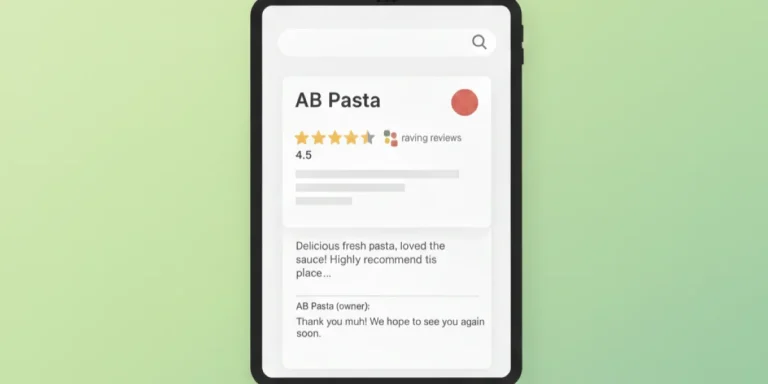
You check your business reviews and find three new 1-star ratings. Your stomach drops. One customer is furious about wait times, another complains about poor service, and the third is upset about product quality. Which one do you respond to first? How do you know which issue will damage your reputation the most if left unaddressed?
According to PowerReviews’ survey, nearly all shoppers read reviews when making purchase decisions. The challenge isn’t just getting reviews; it’s managing negative feedback fast enough to protect your brand. That’s where sentiment analysis for reviews becomes essential for US businesses trying to maintain their reputation across Google, Yelp, and Facebook.
Learn more: Review Gating: What It Is, Why It’s Illegal, and What to Do Instead
What is sentiment analysis, and how does it work?
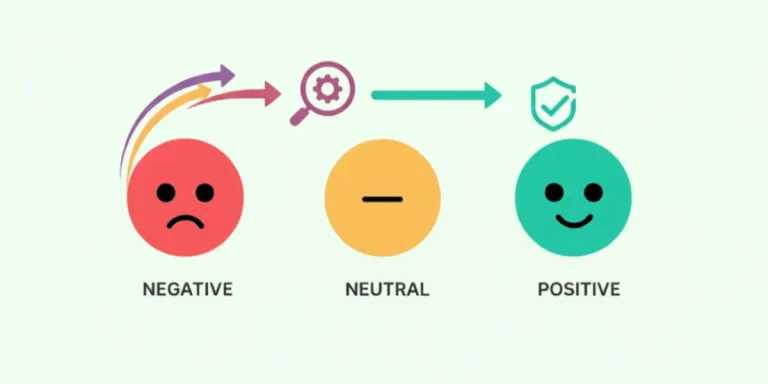
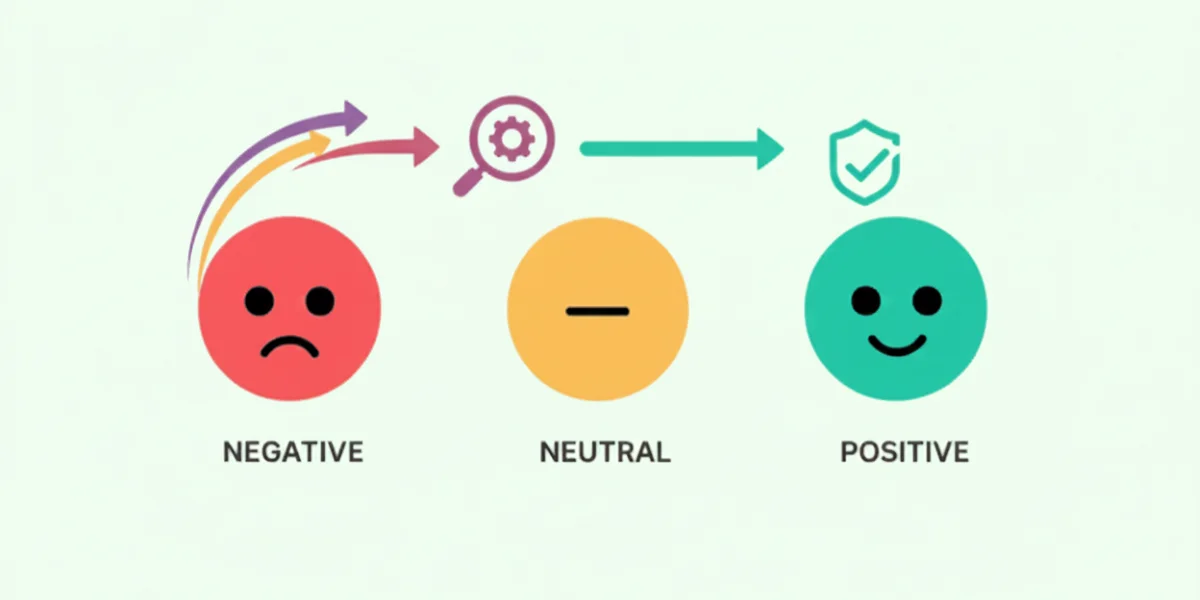
Sentiment analysis uses artificial intelligence to automatically detect whether customer reviews express positive, negative, or neutral emotions. Instead of manually reading every review, AI processes text to identify emotional tone, urgency levels, and specific problems customers mention.
Natural language processing detects emotional context
AI analyzes word choice, sentence structure, and contextual meaning to understand true sentiment. It recognizes that “not great” carries negative sentiment even though “great” is typically positive. The system identifies emotional markers like frustration, anger, disappointment, or satisfaction by evaluating complete phrases rather than isolated words.
Sentiment scoring assigns measurable values to emotions
Reviews receive numerical scores based on emotional intensity detected in the text. Strong negative sentiment gets flagged for immediate attention, while mild dissatisfaction can be scheduled for later response. This scoring helps teams prioritize which reviews need urgent replies versus those that can wait until the next business day.
Context analysis goes beyond individual keywords
The system evaluates complete sentences and paragraph structure rather than isolated words to prevent misclassification. It understands that “I loved everything except the service” contains both positive and negative elements. This contextual understanding ensures accurate sentiment detection even in complex reviews where customers discuss several aspects of their experience simultaneously.
Machine learning improves accuracy over time
AI models continuously learn from corrections and patterns specific to your industry’s language and customer base. As you approve or edit automated responses, the system adapts to your business’s terminology, common complaint patterns, and brand voice. The longer you use the platform, the better it understands your specific needs and communication style.
Real-time processing enables instant detection
Modern sentiment analysis scans incoming reviews within seconds of posting across all connected platforms. This immediate processing automatically triggers alerts for high-priority negative reviews based on emotional intensity and urgency factors. Real-time detection allows your team to respond before situations escalate, spread to other platforms, or influence potential customers researching your business.

How does aspect-based sentiment analysis identify problem areas?
Aspect-based sentiment analysis breaks down reviews into specific topics like service quality, product features, delivery speed, pricing, or cleanliness. This granular approach tells you exactly what customers like or dislike about different parts of your business, rather than providing just an overall sentiment score.
Identifies mixed sentiment in single reviews
Customers frequently praise one aspect while criticizing another in the same review: “Great food, terrible service” or “Fast delivery, damaged packaging.” Aspect-based analysis separates these sentiments, showing positive scores for product quality and negative scores for customer service. This prevents averaging into misleading neutral ratings that hide real problems requiring immediate attention.
Tracks sentiment trends by business category
You can monitor how customer sentiment shifts for specific aspects over time through automated trend dashboards. If delivery complaints suddenly increase over a few months, you immediately know where to focus operational improvements. Tracking aspect-level trends reveals emerging problems before they significantly impact your overall rating or customer retention.
Pinpoints highest-impact improvement areas
When most of your negative reviews mention wait times but only a handful mention parking, you know exactly which problem affects customer satisfaction most. This data-driven prioritization helps allocate limited resources to fixes that will improve ratings most effectively. Focus on resolving high-frequency complaints first for maximum positive impact on customer experience.
Compares performance across multiple locations
Multi-location businesses can compare aspect-level sentiment between stores, franchises, or service centers to identify best practices and problem locations. If one location consistently scores high on cleanliness while another struggles, you have actionable data for targeted staff training. This competitive benchmarking within your organization helps raise all locations to your best-performing standards.
Reveals hidden patterns in customer feedback
Aspect analysis uncovers correlations and patterns that human readers typically miss when reviewing feedback manually. You might discover that negative delivery experiences correlate with specific weekdays, certain drivers, or particular product types. Product quality complaints might spike during specific production shifts or seasons. These insights enable proactive operational fixes before problems affect more customers.
Common challenges in detecting negative sentiment
Manual review monitoring struggles with sarcasm, mixed emotions, context-dependent language, and high volume. AI-powered sentiment analysis tackles these challenges through advanced natural language processing models that have been trained on millions of customer reviews across multiple industries and platforms.
Detecting sarcasm and irony in reviews
“Oh, great, another delayed order” sounds positive superficially, but carries a strongly harmful intent that humans immediately recognize. Advanced NLP models analyze contextual clues, punctuation patterns, phrase structure, and linguistic markers to identify sarcastic language. The AI correctly classifies these as negative sentiment by understanding the contradiction between literal words and the intended meaning expressed through tone.
Handling mixed sentiment accurately
Reviews frequently contain conflicting emotions: “Decent product, awful customer support” or “Love the app features, hate the constant crashes.” AI separates these sentiments by aspect rather than averaging them into misleading neutral classifications. Each business component receives its own sentiment score, preventing positive elements from masking serious negative issues that require immediate attention and resolution.
Understanding industry-specific terminology
Terms like “aggressive” mean different things in financial services versus automotive reviews; one negative, one potentially positive. AI models learn domain-specific language patterns through training on industry-relevant data. This ensures correct interpretation of jargon, technical terms, and specialized vocabulary within your specific business context for more accurate sentiment detection than generic analysis tools.
Identifying emotional intensity levels
Not all negative reviews demand equal urgency or require the same response approach. AI distinguishes between mild disappointment, moderate dissatisfaction, and severe frustration automatically. Priority scoring helps teams address the most emotionally intense, potentially viral reviews first while scheduling responses to lower-intensity feedback appropriately for efficient workflow management.
Processing reviews at scale
Human teams can only read so many reviews per hour before accuracy declines due to fatigue, mood, and subjective interpretation. AI processes thousands of reviews continuously while maintaining consistent accuracy across unlimited volume. This ensures no critical negative feedback slips through unnoticed during high-volume periods like product launches, holiday seasons, or viral social media moments.
Response strategies based on sentiment type
Different sentiment types require different response approaches for optimal customer recovery and reputation protection. Angry reviews need immediate de-escalation and solutions, disappointed customers want acknowledgment and explanations, while mildly negative feedback benefits from clarification requests and improvement commitments that demonstrate active listening.
Responding to angry and frustrated reviews
Acknowledge emotions first before addressing the specific issue: “I understand your frustration with the delayed delivery.” Apologize genuinely without making excuses, then offer immediate, concrete solutions with clear timelines. Provide direct contact information for personalized follow-up. Take heated conversations private quickly by offering phone numbers or email addresses to prevent public escalation.
Addressing disappointed customer feedback
Show empathy by acknowledging their unmet expectations, explaining what happened without defensive language, and committing to specific improvements. “We’re sorry we didn’t meet your expectations on this order. We’ve identified the packaging issue and trained our warehouse team on proper handling procedures. We’d appreciate another chance to serve you better.”
Handling sarcastic or passive-aggressive reviews
Address the underlying concern directly without matching their tone or becoming defensive about the sarcasm. “We hear your frustration about wait times during lunch hours. We’ve added staff during peak periods and implemented a new queuing system.” Focus on solutions rather than the delivery style. Professional responses to sarcastic reviews demonstrate maturity and commitment to improvement.
Converting neutral reviews into positive experiences
Neutral sentiment represents conversion opportunities where customers had acceptable but unmemorable experiences. Reach out personally: “We noticed you had a decent experience with us. Is there anything specific we could improve? We’d love to earn a higher rating next time you visit.” This proactive engagement often converts neutral reviewers into loyal advocates through demonstrated care.
When to escalate to private communication
Move conversations private when reviews mention specific staff members by name, discuss financial disputes or refund requests, raise health and safety concerns, contain legal threats, or use highly emotional, aggressive language. Respond publicly acknowledging the issue and providing direct contact information: “Please call me directly so I can personally resolve this situation today.”
How to turn negative reviews into customer recovery wins?
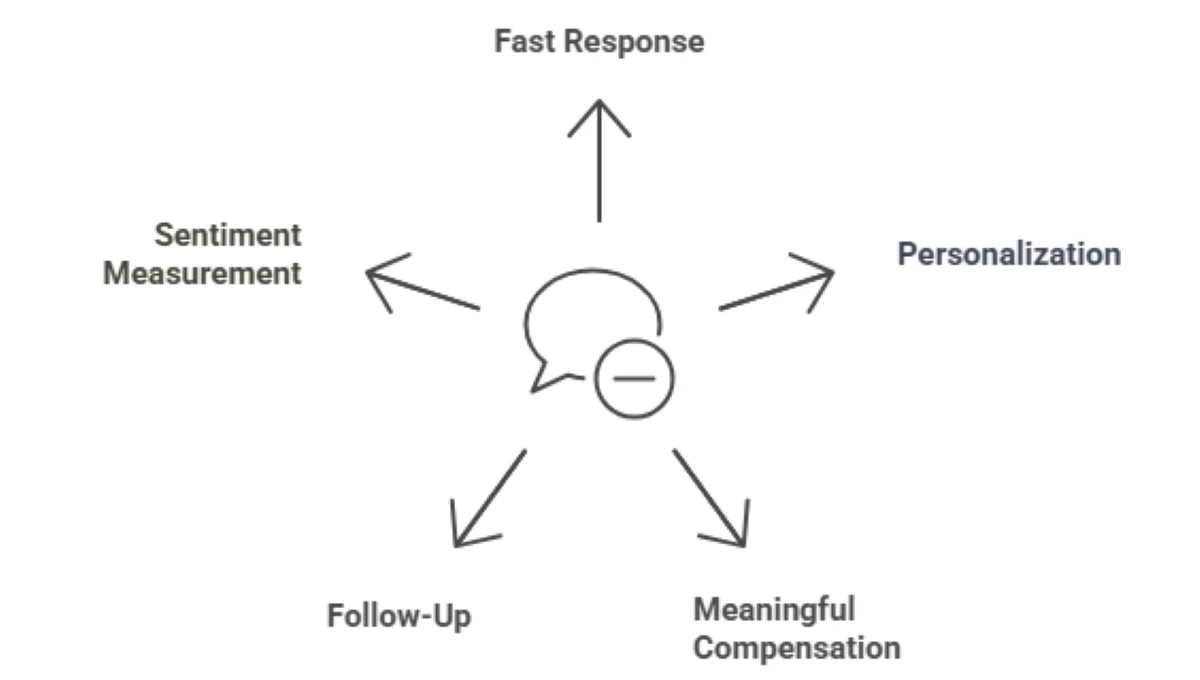
Fast, empathetic responses to negative reviews can transform angry customers into loyal brand advocates who tell others about your exceptional service recovery. Businesses that resolve complaints effectively retain far more customers than those that ignore feedback or respond slowly with template language that feels impersonal and dismissive.
The 24-hour response window advantage
Responding within a day shows customers you actively monitor feedback and prioritize their concerns over routine operations. Quick responses significantly increase the likelihood of review updates or voluntary removals. Delayed responses beyond a few days often trigger additional negative reviews as frustrated customers escalate complaints across multiple platforms seeking the attention they haven’t received.
Personalization beats template responses
Use the customer’s name, reference specific details from their review, and acknowledge their unique situation with customized language. “Hi Sarah, I’m sorry your anniversary’s unexpected kitchen delays disrupted dinner. That’s completely unacceptable for such a special occasion.” Personalized responses demonstrate genuine care versus copy-paste templates that feel dismissive. Customers immediately notice and appreciate individualized attention.
Offering meaningful compensation strategies
Match compensation directly to the severity and impact of the issue on the customer experience. Minor inconveniences warrant discount codes for future visits; significant service failures justify full refunds plus recovery incentives like complimentary products. Make offers specific and immediate rather than vague promises that customers won’t trust or remember to redeem later.
Following up after issue resolution
Contact customers a week or two after resolving their complaint to confirm satisfaction and show continued commitment beyond the immediate crisis. “Hi John, following up on the replacement product we expedited last week. Is everything working as expected now? Your feedback genuinely helps us improve service for all customers.” This unexpected follow-up often converts detractors into promoters.
Measuring customer sentiment shifts post-response
Track whether customers update their original reviews, return for repeat purchases, or change their star ratings after you resolve issues successfully. A 1-star review updated to 4 stars with “Originally frustrated, but they made it right” demonstrates successful recovery publicly. These visible transformations build trust with prospective customers, evaluating your reputation and responsiveness to problems.
Sentiment analysis vs manual review monitoring: a comparison
| Factor | Manual Review Monitoring | AI Sentiment Analysis |
| Processing speed | Slow, limited by reading speed | Processes thousands instantly |
| Consistency | Varies by person, mood, fatigue | Maintains consistent accuracy |
| Urgency detection | Easy to miss emotional intensity | Automatically prioritizes urgent issues |
| Aspect insights | Time-consuming manual categorization | Instant topic and sentiment breakdown |
| Scalability | Requires hiring more staff | Handles unlimited volume automatically |
| Response time | Typically several days | Enables same-day responses |
| Context understanding | Depends on the reader’s attention | Trained to detect sarcasm and nuance |
| Trend analysis | Requires manual spreadsheet work | Automated dashboards and reports |
| Multi-platform coverage | Requires checking each site separately | Centralized monitoring across all channels |
| Team burnout | Repetitive, emotionally draining work | Reduces stress through automation |
Key benefits and ROI of automated sentiment analysis
Automated sentiment analysis delivers measurable business impact through faster response times, improved customer retention, and significantly reduced operational costs. Businesses typically see positive returns within months of implementation through saved labor costs and recovered customer relationships that would otherwise have been permanently lost.
Average response time reduction
Businesses dramatically reduce review response times with automated priority alerts and AI-drafted responses. This speed improvement prevents negative sentiment from spreading on social media while customers are still actively discussing their poor experience with friends and family. Faster responses demonstrate attentiveness that often de-escalates angry customers before situations become irreparable reputation damage.
Customer retention rate improvements
Fast, empathetic responses to negative reviews substantially increase customer retention compared to businesses that ignore or slowly respond to complaints. When businesses resolve complaints quickly, most dissatisfied customers are willing to return for repeat purchases. This contrasts sharply with minimal retention when complaints go completely unaddressed, resulting in permanent customer loss and negative word-of-mouth marketing.
Star rating improvements over time
Consistent negative review management combined with proactive response strategies improves overall ratings within months of implementation. Even small rating improvements generate substantial revenue increases because consumers heavily weigh reviews in purchase decisions across all industries. Moving from a mid-range rating to above four stars creates noticeable increases in customer inquiries and conversion.
Labor cost savings per month
Automating sentiment detection, priority scoring, and response drafting significantly reduces manual review monitoring labor without sacrificing quality or coverage. Businesses spending thousands monthly on review management staff can reduce costs substantially while simultaneously improving response speed and consistency. These savings compound monthly while freed staff members focus on higher-value customer service activities that require human judgment.
Local SEO ranking improvements
Google’s search algorithm actively favors businesses that respond quickly to reviews while maintaining strong ratings in local search results. Businesses with high ratings and consistent response rates rank significantly higher in critical “near me” searches compared to competitors with similar ratings but poor engagement. This visibility advantage drives organic traffic without additional advertising spend, creating compounding returns on reputation management investment.
Turn negative reviews into trust-building opportunities
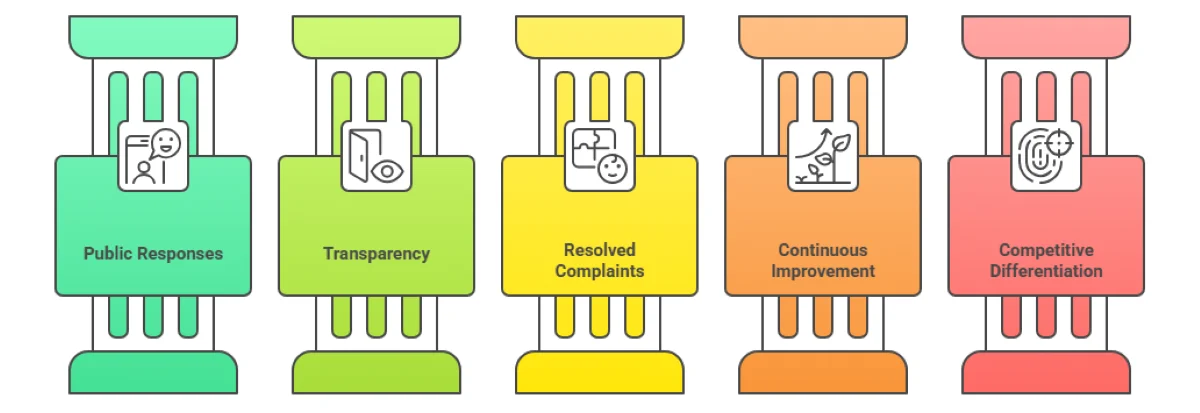
Potential customers read negative reviews and your responses carefully to evaluate trustworthiness and company character before making purchase decisions. How you handle public criticism demonstrates company values, accountability, and customer commitment more powerfully than any marketing message, testimonial, or advertising campaign could ever achieve authentically.
Public responses signal company values
Your response to negative reviews shows prospective customers exactly how you’ll treat them when inevitable problems arise during normal business operations. Professional, empathetic replies build confidence that you stand behind your products and prioritize customer satisfaction over defensiveness or profit protection. Consumers increasingly value brands that own mistakes publicly rather than companies presenting unrealistic perfection.
Transparency builds long-term trust
Acknowledge mistakes openly rather than making excuses, deflecting blame, or hiding behind corporate policies that frustrate customers further. “You’re right, we dropped the ball on communication about your order delay. We’ve implemented a new automated notification system to prevent this from happening to other customers.” Radical honesty creates stronger emotional relationships than maintaining perfect review facades.
Resolved complaints become social proof
Customers who see you successfully fix someone else’s problem feel significantly safer taking the risk of buying from your business. Updated reviews stating “Originally frustrated by the issue, but the owner personally resolved everything quickly” serve as powerful testimonials to service quality. These visible recoveries often influence purchase decisions more than perfect reviews because they demonstrate real accountability.
Demonstrating continuous improvement
Reference specific operational changes made directly from customer feedback: “Thanks to reviews like yours, we’ve extended operating hours, added online booking, and trained additional staff for peak periods.” This communication shows you actively listen to customers and evolve your business based on their expressed needs. Prospective customers appreciate knowing their future feedback will actually matter.
Creating competitive differentiation
Many businesses completely ignore negative reviews or respond with defensive, template language that frustrates customers further. Your consistent, professional, personalized responses differentiate you from competitors dramatically. When prospects compare review pages during their research process, your genuinely engaged approach creates a strong preference even if your overall star rating is slightly lower than non-responsive competitors.
How does Pronto help with responding to reviews using sentiment analysis?
Pronto delivers an all-in-one toolkit designed to help businesses of any size easily manage, respond to, and learn from customer reviews, no matter the industry.
Sentiment and rating management
Track ratings, monitor customer sentiment, and protect your reputation with ease. Visual dashboards display sentiment trends, response time metrics, and rating changes across all locations. Identify emerging problems before they damage your overall score, measure the impact of operational improvements, and benchmark performance across multiple business locations effectively.
Google review booster
Reply to reviews so customers feel heard and new visitors see you care. Consistent engagement improves your online reputation, builds customer loyalty, and signals to Google that your business actively values feedback, boosting local search visibility and conversion rates significantly over time through increased trust.
Instant Google review sync
Every new review is delivered to your WhatsApp in real time—no manual checking needed. Stay instantly informed about customer feedback wherever you are, ensuring you never miss important reviews during busy periods, evenings, weekends, or when managing multiple business locations simultaneously across different cities or regions.
AI-smart reply drafts
Get ready-to-send responses crafted by AI to match your tone and customer sentiment. The system analyzes each review’s emotional context and generates appropriate replies that maintain professionalism while addressing specific concerns. Simply edit if needed and publish, saving hours of manual writing time daily while maintaining response quality.
Improve with a feedback loop
Pronto learns from your edits and approvals, making replies more personal with time. As you customize AI-generated responses, the system adapts to your unique brand voice, industry terminology, and preferred customer communication style. This continuous learning creates increasingly accurate, personalized responses that require minimal editing as time passes.
WhatsApp review control
Approve, edit, or auto-publish replies without leaving WhatsApp. Manage your entire review response workflow from your phone through the world’s most popular messaging app. This mobile-first approach enables faster response times and greater flexibility, especially valuable for busy business owners constantly on the move throughout their day.
One-stop Google integration
Manage all your Google reviews in one powerful, easy-to-use system. Eliminate the need to log into Google Business Profile repeatedly throughout the day. View, respond to, and track all Google review activity from a centralized dashboard that saves time and reduces the complexity of multi-platform reputation management significantly.
Secure cloud storage
Every review and response is safely stored, searchable, and accessible anytime. Never lose important customer feedback or your carefully crafted responses. Access historical review data to identify long-term trends, train new staff members, or reference past interactions when handling repeat customers with ongoing service issues or questions.
Frequently asked questions
How does sentiment analysis help manage negative reviews?
Sentiment analysis uses AI to detect negative emotions in customer reviews, allowing businesses to prioritize and respond quickly before issues escalate.
Why is a fast response to negative reviews important in the US market?
US customers expect quick responses. Delays can reduce trust, impact local SEO, and lead to lost business opportunities.
Can sentiment analysis automatically detect urgent reviews?
Yes, AI-powered sentiment analysis identifies emotional intensity and urgency, helping teams address critical reviews first.
Does Pronto support multi-location businesses?
Yes, Pronto is designed for multi-location US businesses, enabling centralized review, monitoring, and response management.
Can sentiment analysis improve overall brand reputation?
Consistent, fast responses to negative feedback help improve customer trust, ratings, and long-term brand perception.